
Call-out fee: $80–$180
What most Sydney plumbers charge to attend. Ask for it on the phone. Anyone who will not name it is telling you something.
Genuine round-the-clock cover across Millers Point. You get an honest ETA rather than a flattering one, a fixed price before work starts, and on the calls that can safely wait, you get told that too.
After-hours work is not the same trade as daytime work. The parts have to be on the van because no supplier is open, the diagnosis has to be right first time because there is no second attendance that night, and the person answering the phone has to be able to tell a genuine emergency from something that is cheaper on Monday.
That last part matters more than it sounds. Telling you a job can safely wait costs us the callout and saves you a premium, and it is the fastest way to know whether the outfit you have rung is worth using again.

The land plunges from Observatory Hill to Walsh Bay, and stormwater tearing downhill overwhelms undersized heritage drains in every major storm.
A drainage system laid a century ago was built for a household that used a fraction of the water yours does. Add a second bathroom, a dishwasher and a washing machine, and lines that coped for decades start showing where they are weakest.
That is not an argument for replacing everything. It is an argument for knowing which sections are actually tired, so the money goes into those rather than into the whole run on the assumption that old means finished.
Grease does not block a line suddenly. It narrows it over months, and the failure arrives on the night of the highest load — a full service, a function, a long weekend.
Historic pubs and the busy dining trade around the point put constant grease loads through old narrow lines never designed for it.
That is why the useful question after a commercial blockage is not what went down the sink tonight, but when the trap was last pumped and the line last jetted. We will give you both dates from what the camera shows, and a realistic interval to keep to.
Millers Point crowns the western side of Sydney Cove (postcode 2000), a heritage harbourside village of 19th-century terraces between The Rocks, Dawes Point and the Barangaroo foreshore. Two centuries of layered pipework beneath sandstone streets make it one of Inner Sydney’s most challenging, and most interesting, suburbs for drain work.
Heavy rain arriving on a high tide is the combination that fills yards near the water. Stormwater that normally drains away has nothing to drain into, so it backs up through the pits instead — which is why a blocked line around here shows itself in the garden long before it shows itself indoors.
If your yard has filled more than once, the pit is telling you something. Clearing it during the storm is emergency work; finding out why it filled is a twenty-minute camera run on a dry day, and considerably cheaper.
A drain on a slope moves water fast, and fast is not always good. Waste can outrun the liquid carrying it on a steep run and settle at the first flat section, building up at exactly the same spot each time.
Terraces cut into the sandstone slope sit below street level in places, so a choked line quickly sends water into basements and lightwells.
The tell is a blockage that recurs at the same interval in the same place. That is a gradient problem, not a usage problem, and no amount of careful flushing fixes it — the answer is to see the profile of the line and correct the section that is wrong.
An after-hours visit is about making it safe and usable: clear the blockage, get the fixtures working, and stop anything overflowing. That is nearly always achievable.
What does not happen at midnight is a structural repair. If the camera shows a cracked or root-filled run, you will hear that on the night with the options, and the actual fix is booked in daylight when it can be done properly.
Original earthenware gives way at the joints, and it rarely announces itself politely. Roots find the joint, the joint opens, and the section finally lets go on a night with the house full and one bathroom working.
Old pipe is not automatically bad pipe. But when a heritage-era line fails once, it is worth knowing whether you have had one bad joint or a tired run. We clear it, camera it before we leave, and you keep the footage — so any decision about relining is yours to make on evidence rather than on our word.
Ground close to the water holds more of it, sits lower, and moves more than ground further up. Over decades that shows up in the drainage as joints that have opened slightly, falls that have flattened, and lines that silt where they once ran clean.
None of that is an emergency by itself. It is the reason an emergency here often turns out to be the last stage of something that has been developing quietly, and why the camera run after the clear is worth more than the clear.
What most Sydney plumbers charge to attend. Ask for it on the phone. Anyone who will not name it is telling you something.
Against roughly $120–$160 in business hours. Nights, weekends and public holidays sit at the top of the range.
Call-out, the first stretch of labour and minor parts, for the common jobs: an isolated burst, a blocked toilet, a failed valve.
Slab leaks, gas line faults and anything needing walls opened at 2am climb quickly. You hear the number before we start, not after.
If it can genuinely hold, isolated, contained, water off, we will say so on the phone and book you at daylight rates instead.
These are market ranges, not our quote. You hear your number first and decide with it in front of you. Figures here are indicative of the 2026 Sydney market rather than a quote from us, you get your own number as a fixed price before any work starts.

Before any booking, the person on the phone tells you what to isolate. That call is where most of the damage is either prevented or done.
You are told when someone can actually be there, not a number designed to keep you on the line. If that is ninety minutes, it is ninety minutes.
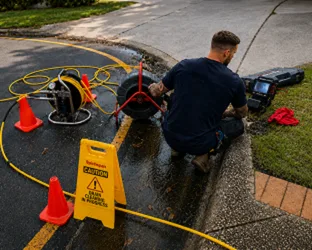
Stop the water, make the area safe, find the cause. Only then does a price get put in front of you, and nothing starts until you have agreed it.

Finished on the night wherever the parts allow. Where they do not, you are left watertight and usable, with the return booked before we leave.
Describe what it is doing and we will tell you honestly whether it needs a van now or costs less on Monday.
Ring us and a plumber picks up. Leave details instead and you will get a callback with an ETA, not a sales call.

Leave your details and our local Millers Point team will call you back fast.